
Car theft is a growing concern across the United States. Every year, thousands of vehicles are stolen, leaving owners stressed, confused, and financially vulnerable. One of the biggest questions drivers ask after theft is simple: Does car insurance cover theft?
The short answer is: Yes, but only if you have comprehensive coverage.
Many people assume their standard auto insurance policy covers everything, but that is not always true. Understanding how theft coverage works can save you money and help you make smarter insurance decisions.
According to the National Insurance Crime Bureau (NICB), vehicle theft remains one of the most common property crimes in the US. That makes knowing your policy more important than ever.
If you have ever wondered whether your insurer will pay for a stolen car, this guide explains everything clearly.
Read also:- Insurance Claim Rejected Reasons
🔍 What Type of Car Insurance Covers Theft?
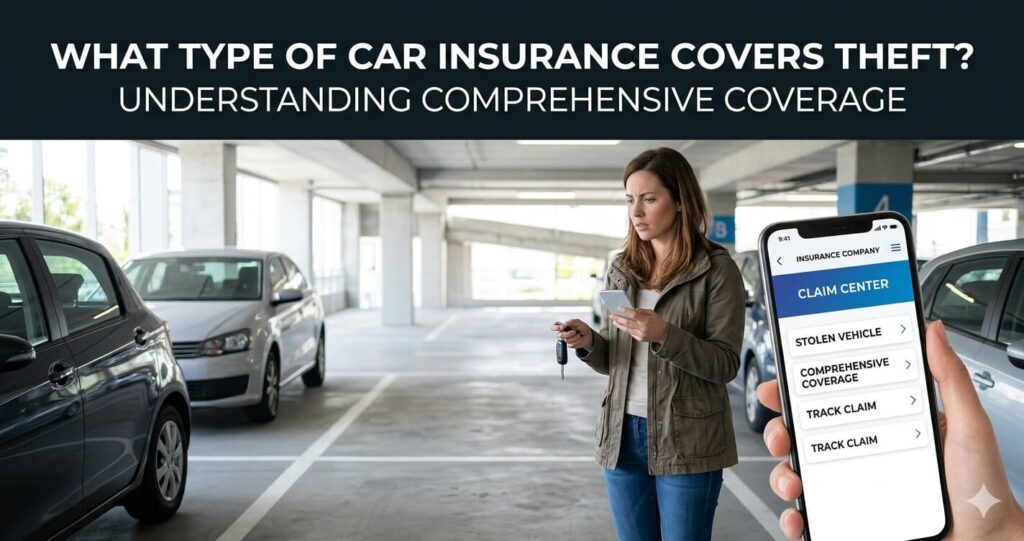
Not every car insurance policy includes theft protection.
There are three major types of auto insurance:
📌 Liability Insurance
This is the minimum required in most states. It covers damage you cause to others but does not cover theft.
📌 Collision Insurance
This pays for accident-related damage but does not cover theft.
📌 Comprehensive Insurance
This is the important one.
Comprehensive insurance protects against:
- Theft
- Vandalism
- Fire
- Flood
- Falling objects
- Natural disasters
If your car is stolen and you have comprehensive coverage, your insurer may pay you based on the car’s actual cash value.
According to the Insurance Information Institute (III), comprehensive insurance is the primary coverage for stolen vehicles.
🚘 Does Car Insurance Cover a Stolen Car?
Yes, but there are conditions.
✅ You must have active comprehensive insuranceIf your car is stolen:
✅ Your premiums must be up to date
✅ The theft must be reported to police
✅ You must file a claim quickly
Insurance companies investigate before approving claims.
They check:
- Police reports
- Vehicle history
- Loan status
- GPS data
- Fraud indicators
This process protects both the insurer and the policyholder.
💰 How Much Will Insurance Pay for a Stolen Car?
nsurance usually pays the Actual Cash Value (ACV) of your vehicle.
Actual Cash Value means:
Current market value – depreciation = payout
Example:
If your car was worth $18,000 and your deductible is $1,000:
Insurance payout = $17,000
⚠ Important Note About Depreciation
Cars lose value over time.
That means you may receive less than what you originally paid.
This is why many financed car owners choose Gap Insurance.
Read also:- Health Insurance with OPD Cover in India (2025 Guide)
📋 What Should You Do If Your Car Gets Stolen?
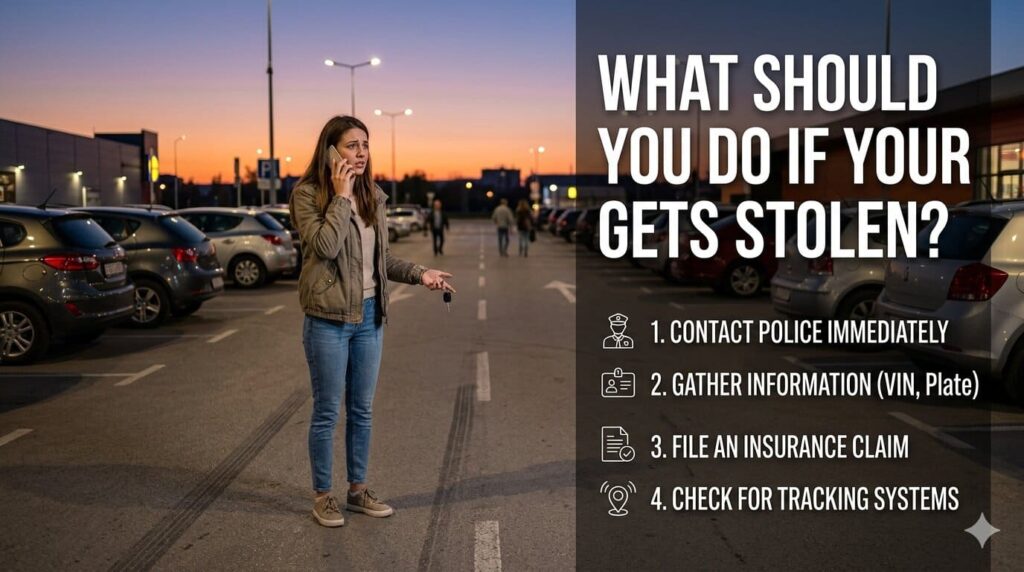
Act fast.
1️⃣ Report to Police Immediately
This is your first step.
Without a police report, your insurer may delay your claim.
Include:
- Vehicle number
- VIN
- Last known location
- Time of theft
You can also verify theft prevention resources through NICB VINCheck.
2️⃣ Contact Your Insurance Company
Call your insurer as soon as possible.
Provide:
- Policy number
- Police report number
- Car details
- Theft circumstances
Faster reporting often speeds up claim processing.
3️⃣ Gather Important Documents
Keep these ready:
- Registration
- Driving license
- Loan details
- Car keys
- Purchase receipt
Missing documents can delay approval.
Read also:- Motor Insurance for Electric Vehicles (EV) in India 2025
❌ What If Personal Items Were Inside the Car?
Many drivers misunderstand this.
Car insurance usually covers the vehicle itself, not personal belongings inside it.
Example items:
- Laptop
- Phone
- Wallet
- Bags
These may be covered under homeowners or renters insurance instead.
Check USA.gov Insurance Resources for policy guidance.
⚖ What Happens If Your Stolen Car Is Recovered?
Sometimes police recover stolen vehicles.
Two possibilities:
✅ Car Recovered Without Major Damage
Your insurer may pay repair costs.
❌ Car Recovered With Severe Damage
If repair costs exceed market value, the insurer may declare it a total loss.
Then you may receive the ACV payout.
🛡 How to Reduce the Risk of Car Theft
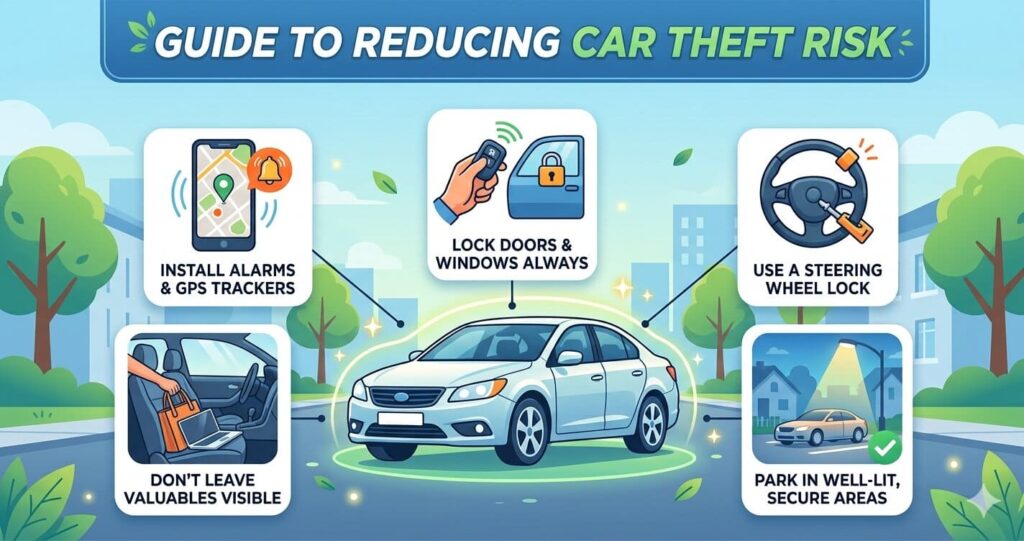
Prevention matters.
Here are smart steps:
🔐 Install an Anti-Theft Device
Alarms and GPS trackers can lower theft risk.
Some insurers even offer discounts.
📍 Park in Safe Areas
Choose:
- Garages
- Well-lit spaces
- Security-monitored areas
🔑 Never Leave Keys Inside
This simple mistake increases theft risk.
📲 Use Tracking Technology
Apps like vehicle GPS systems can help recovery.
🤔 Is Comprehensive Insurance Worth It?
It depends on your car’s value and location.
Comprehensive coverage may be worth it if:
✅ You live in a high-theft area
✅ Your car has high resale value
✅ You have an auto loan
✅ You want financial peace of mind
It may not be worth it if:
❌ Your car has very low market value
❌ Premium costs are too high
Always compare cost vs risk.
📉 Will Theft Claims Increase Insurance Rates?
Possibly.
Although theft is not usually your fault, some insurers may adjust future premiums.
Factors include:
- Claim history
- Location
- Vehicle model
- Theft trends
📝 Final Thoughts: Does Car Insurance Cover Theft?
So, does car insurance cover theft?
Yes—but only if you have comprehensive coverage.
Without it, you may have to pay the full loss yourself.
Car theft can happen unexpectedly. The best protection is understanding your insurance policy before you need it.
Review your policy, know your deductible, and keep your documents updated.
A little preparation today can save you thousands tomorrow.
Read also:- Emergency Fund Guide
❓ Frequently Asked Questions (FAQs)
Does liability insurance cover theft?
No. Liability insurance only covers damages to others.
How long does a stolen car claim take?
Usually between 7 to 30 days depending on investigation.
Can I claim if my keys were left inside?
Yes, but it depends on your insurer’s policy.
Does full coverage include theft?
In most cases, yes—because full coverage includes comprehensive insurance.
What if I still owe money on the car?
Your payout may go toward your loan first.
1 thought on “Does Car Insurance Cover Theft? Full Guide for US Drivers (2026)”