

how to start a retirement fund in your 20s Retirement may feel like something that is far away when you are in your 20s. Most young adults in the USA focus on paying bills, building careers, clearing student loans, or saving for short-term goals like buying a car or traveling. But the truth is simple: the earlier you start your retirement fund, the easier your financial future becomes.
Many people think retirement planning is only for those in their 40s or 50s. That idea is outdated. In 2026, with rising inflation, uncertain job markets, and increasing living costs, building retirement savings in your 20s is one of the smartest financial decisions you can make.
Starting early gives you one huge advantage: compound growth.
Imagine investing just $200 per month from age 25. By the time you retire, that small amount can turn into hundreds of thousands of dollars—sometimes even over a million—depending on returns.
That’s the power of time.
This guide will explain everything in simple language:
- What a retirement fund is
- Why you should start in your 20s
- Best retirement accounts in the USA
- Step-by-step process
- Common mistakes to avoid
- Smart beginner strategies
By the end of this guide, you’ll know exactly how to start your retirement journey—even if you’re starting with a small income.
📌 What Is a Retirement Fund?
A retirement fund is money you save and invest during your working years so you can support yourself after you stop working.
Instead of depending only on Social Security, a retirement fund helps you maintain your lifestyle.
Think of it as your future paycheck.
Retirement funds usually grow through investments like:
- Stocks
- Bonds
- ETFs
- Mutual funds
- Index funds
- Real estate investments
The goal is simple:
Put money in now → let it grow over time → use it later in life
The earlier you start, the more time your money has to multiply.
🚀 Why Starting in Your 20s Gives You a Huge Advantage
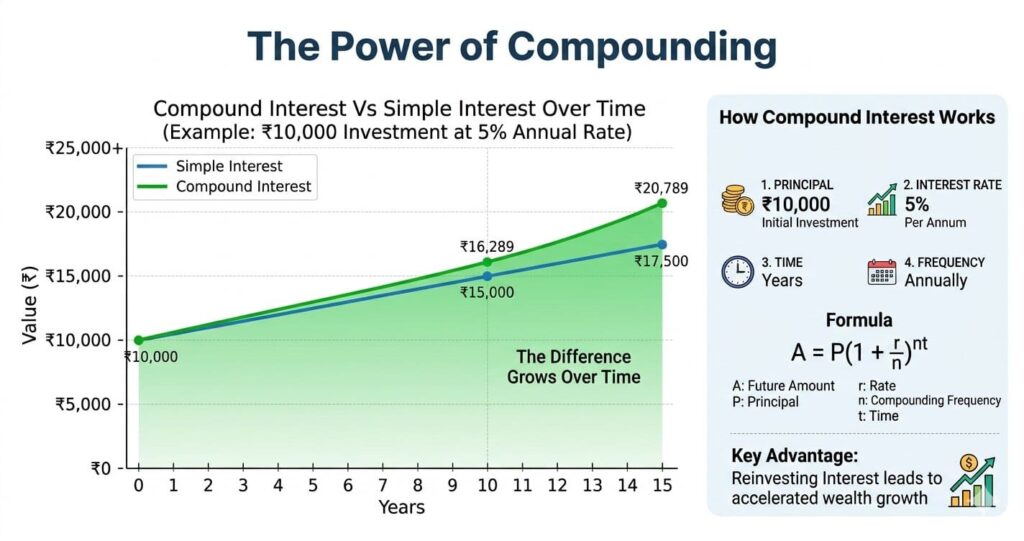
Starting retirement early changes everything.
Here’s why:
⏳ 1. Compound Interest Works Longer
Compound interest means your money earns money, and then that money earns more money.
Example:
If you invest $300 monthly at age 22 with an average 8% return:
- By age 32 = around $55,000+
- By age 42 = around $180,000+
- By age 62 = $1,000,000+ possible
That’s why time matters more than amount.
The biggest mistake is waiting.
💸 2. Smaller Contributions Are Enough
People who start late must invest much more.
Example:
Start at 25 = $300/month
Start at 40 = $1,000+/month for similar results
Starting early reduces pressure.
📈 3. Better Risk Tolerance
In your 20s, you have time to recover from market crashes.
That means you can invest aggressively and potentially earn higher returns.
Young investors usually focus more on growth.
🛡 4. Financial Freedom Comes Earlier
Early retirement becomes possible.
If you build enough wealth early, you may retire before 60.
This connects with the FIRE movement (Financial Independence, Retire Early).
🇺🇸 How Retirement Works in the USA
In the USA, retirement income usually comes from three sources:
1. Social Security
This is government-provided income after retirement.
But Social Security alone is often not enough.
That’s why personal retirement savings matter.
Read Also:- Learn more at the official Social Security Administration website.
2. Employer-Sponsored Plans
Many employers offer retirement plans like:
- 401(k)
- 403(b)
These plans often include employer matching.
This is free money.
Never ignore employer matching.
3. Personal Retirement Accounts
These include:
- Roth IRA
- Traditional IRA
- Brokerage Accounts
These accounts give you more control.
🏦 Best Retirement Accounts for Beginners in Their 20s
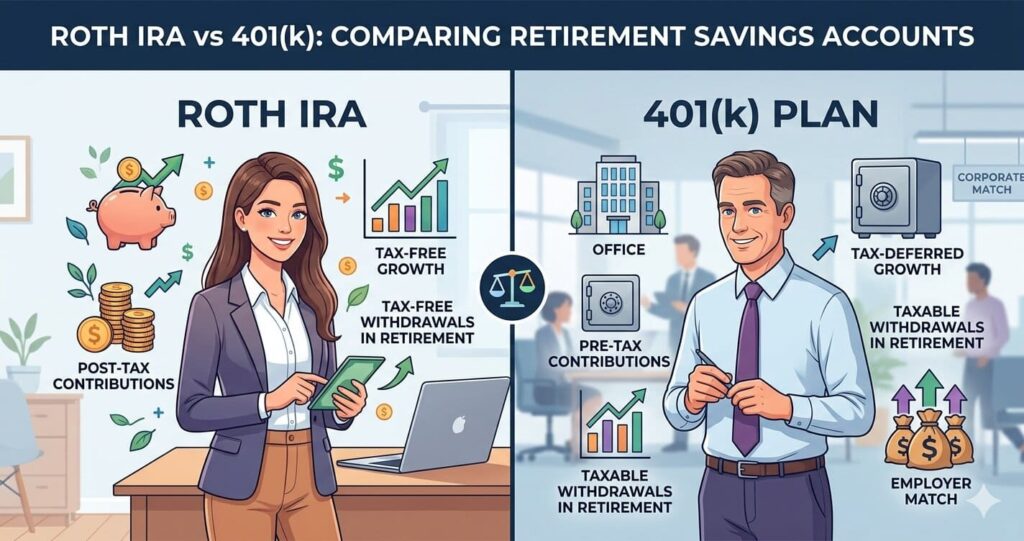
Choosing the right account is important.
Let’s break them down.
💼 1. 401(k)
A 401(k) is offered by employers.
Benefits:
- Automatic deductions
- Employer matching
- Tax advantages
- Easy to maintain
Example:
If your employer matches 5%, contribute at least 5%.
Otherwise, you leave free money behind.
Best for:
Employees with company benefits
Read Also:- Check contribution limits through Internal Revenue Service.
🌟 2. Roth IRA
A Roth IRA is one of the best options for young adults.
Why?
You contribute after-tax money.
Your money grows tax-free.
You withdraw tax-free in retirement.
That’s powerful.
Best for:
Young earners who expect higher income later
Ideal for:
Long-term wealth building
📊 3. Traditional IRA
Traditional IRA gives tax deductions now.
But you pay taxes later.
Best for:
People wanting tax savings today
💹 4. Brokerage Account
No retirement restrictions.
You can invest anytime.
Good for flexibility.
But no tax advantages.
Best for:
Extra investing after maxing retirement accounts
🎯 How Much Should You Save in Your 20s?
A common rule:
Save 15%–20% of your income
Example:
Income = $3,000/month
Retirement savings:
15% = $450/month
But if that feels too much:
Start with:
- $50/month
- $100/month
- $200/month
Small beginnings matter.
Consistency wins.
🔥 The Biggest Myth About Retirement Saving
Many young people think:
“I’ll start when I earn more.”
That sounds logical.
But it’s risky.
Because lifestyle inflation grows too.
More income usually means:
- More expenses
- More subscriptions
- Bigger rent
- Bigger spending
Starting now builds discipline.
Even small amounts create habit.
That habit builds wealth.
Read Also:- How to Build an Emergency Fund Fast
📍 Part 1 Summary
So far, you learned:
- What retirement funds are
- Why starting in your 20s matters
- How retirement works in the USA
- Best account types
- How much to save
🛠 Step-by-Step: How to Start Your Retirement Fund in Your 20s
Ab theory samajh li. Ab practical action.
Retirement fund start karna complicated nahi hota. Bas right steps follow karne hote hain.
✅ Step 1: Set Your Retirement Goal
Sabse pehle yeh decide karo:
- Kis age me retire karna chahte ho?
- Retirement ke baad kitni monthly income chahiye?
- Kis lifestyle ko maintain karna chahte ho?
Example:
If you want $50,000 per year after retirement and expect 25 years of retirement, you may need $1M+ depending on inflation and investment growth.
Important:
Inflation ko ignore mat karo.
Aaj ka $50,000 future me utna powerful nahi hoga.
Read Also:– Use U.S. Bureau of Labor Statistics inflation calculator for better planning.
💳 Step 2: Build an Emergency Fund First
Retirement investing se pehle emergency fund zaroor banao.
Why?
Short-term emergencies are rare because of market investments.
Ideal emergency fund:
- 3–6 months expenses
- Separate savings account
- Easy access
Example:
Monthly expenses = $2,000
Emergency fund target = $6,000–$12,000
Read Also:- How to Build an Emergency Fund Fast
Is point par apne emergency fund article ka internal link lagao.
🏢 Step 3: Check If Your Employer Offers a 401(k)
Agar tum job karte ho:
Ask your employer:
- Do they offer 401(k)?
- Do they match contributions?
Employer match = free money.
Example:
You contribute 5%
Employer matches 5%
That doubles your money instantly.
Priority rule:
401(k) match first → Roth IRA second
🌟 Step 4: Open a Roth IRA
Agar employer plan nahi hai ya extra invest karna hai:
Open a Roth IRA.
Popular USA brokers:
- Fidelity Investments
- Charles Schwab Corporation
- Vanguard Group
These are beginner-friendly.
Look for:
- No account fees
- Low expense ratio funds
- Easy mobile app
- Auto-invest option
📈 Step 5: Choose Your Investments
This is where many beginners get confused.
Simple rule:
Don’t chase hype.
Best beginner options:
Index Funds
Index funds track the market.
Examples:
- S&P 500 index fund
- Total market fund
Why good?
- Low cost
- Diversified
- Beginner friendly
- Long-term growth
ETFs
ETFs are similar to index funds.
Flexible and low-cost.
Popular categories:
- Total stock market
- International stocks
- Bonds
Target-Date Funds
Best for total beginners.
These automatically adjust risk as you age.
Example:
Retirement year 2065 → choose target date 2065 fund.
Very easy.
⚖ Roth IRA vs 401(k): Which Is Better?
Both are good.
But priorities differ.
Choose 401(k) First If:
- Employer offers matching
- You want automatic payroll contributions
- You want tax deduction now
Choose Roth IRA First If:
- No employer match
- You want tax-free retirement income
- You want more investment control
Best strategy:
- Take employer match
- Max Roth IRA
- Increase 401(k)
This is a powerful sequence.
📊 Best Asset Allocation in Your 20s
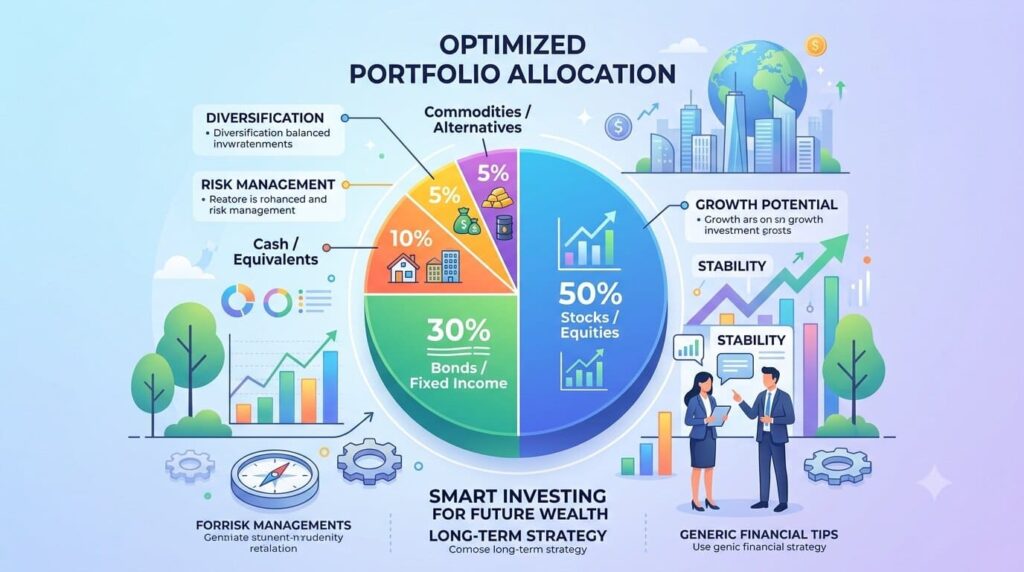
Because you are young:
Growth should be your focus.
Simple beginner allocation:
Aggressive Growth Portfolio
- 80% stocks
- 20% bonds
OR
- 90% stocks
- 10% bonds
Higher risk, higher growth potential.
Moderate Portfolio
- 70% stocks
- 30% bonds
Lower volatility.
Good for cautious beginners.
Super Simple Portfolio
- 100% target-date fund
Easiest option.
Zero stress.
🤖 Should You Use AI for Budgeting?
In 2026, AI budgeting tools are becoming popular.
They help with:
- Expense tracking
- Saving goals
- Investment suggestions
- Cash flow analysis
Examples:
- Rocket Money
- YNAB
- Empower Personal Dashboard
Read Also:- How to Create a Personal Budget Using AI Tools
Agar tum future me ye article likho, isko yahan link kar sakte ho.
📅 How Often Should You Invest?
Best answer:
Every month.
This is called:
Dollar-cost averaging.
Meaning:
Invest fixed money regularly.
Example:
$200 every month.
Benefits:
- Reduces emotional investing
- Reduces timing risk
- Builds discipline
Consistency > timing.
🚫 Common Beginner Mistakes to Avoid
❌ Waiting Too Long
Biggest mistake.
Time is your biggest asset.
❌ Trying to Time the Market
Nobody can predict perfectly.
Stay consistent.
❌ Investing Without Emergency Savings
This creates risk.
Emergency fund first.
❌ Following Social Media Hype
Avoid random stock trends.
Focus on long-term investing.
❌ Ignoring Fees
High fees kill returns.
Always check expense ratio.
Lower is better.
📍 Part 2 Summary
In this part, you learned:
- How to start step by step
- Why emergency fund matters first
- How Roth IRA and 401(k) work
- Best beginner investments
- Asset allocation basics
- Common mistakes
📈 How Much Will Your Retirement Fund Increase Over Time?
Retirement investing ka magic sirf saving me nahi, growth me hota hai.
Example:
Age: 24
Monthly investment: $250
Average return: 8%
Retirement age: 65
Potential result:
- Total invested: around $123,000
- Total value: around $875,000+
That means most money growth se aayega, sirf contributions se nahi.
Now imagine:
$500/month
That could cross $1.5M+ over time.
This is why starting early matters.
Time multiplies wealth.
🔢 Use Retirement Calculators
Retirement calculators help estimate future value.
Trusted sources:
- Investor.gov
- NerdWallet
- Bankrate
Use these before setting targets.
💡 Advanced Tips to Grow Faster
Once basics are set, use these advanced methods.
📈 Increase Contributions Every Year
Try increasing your retirement savings by 1% yearly.
Example:
- Age 24 = 8%
- Age 25 = 9%
- Age 26 = 10%
Small increases create big long-term impact.
🎁 Invest Bonuses and Tax Refunds
Instead of spending extra money:
Invest it.
Good sources:
- Annual bonus
- Side hustle income
- Tax refunds
This accelerates growth.
💰 Reduce Lifestyle Inflation
When income increases:
Don’t increase spending at same speed.
Example:
Salary increases by $500
Use:
- $300 for investing
- $200 for lifestyle
Balance matters.
🔁 Rebalance Your Portfolio
Every year:
Check asset allocation.
Example:
If stocks become 95% and bonds become 5%, rebalance.
This controls risk.
🧠 Retirement Mindset for Your 20s
Retirement is not about becoming rich overnight.
It’s about building freedom.
A strong retirement fund gives:
- Less stress
- More choices
- Earlier retirement
- Better family security
- Freedom from working forever
Financial discipline in your 20s creates options in your 40s.
That’s the real goal.

❓Frequently Asked Questions (FAQ)
Is $100 a month enough to start?
Yes.
Starting small is far better than waiting.
Consistency matters most.
Should I pay debt or invest first?
Depends.
High-interest debt first.
Low-interest debt can be managed alongside investing.
Read Also:- How to Improve Your Credit Score Fast in the USA
Use your related finance article here.
Is Roth IRA better than 401(k)?
Not always.
If employer match exists:
401(k) first.
Otherwise Roth IRA is often better for young adults.
Can I retire early if I start in my 20s?
Yes.
With discipline and strong investing, early retirement is possible.
What if I have irregular income?
Use flexible monthly contributions.
Even $50–$100 matters.