

One of the most crucial financial habits that anyone can form is saving money. The correct savings account can make a big difference whether you’re attempting to establish long-term financial security, plan a vacation, buy a house, or prepare for emergencies.
Many Americans still keep their money in traditional savings accounts that pay extremely low interest rates. While these accounts provide a safe place to store money, they often fail to help savings grow at a meaningful pace.
This is where a High-Yield Savings Account (HYSA) becomes a smarter option.
A High-Yield Savings Account offers substantially higher interest rates than a regular savings account while keeping your money safe and easily accessible. Over time, the difference in interest earned can add up to hundreds or even thousands of dollars without requiring any additional effort from you.
In this complete beginner’s guide, you’ll learn everything you need to know about High-Yield Savings Accounts, including how they work, why they’re popular, their advantages and disadvantages, how to choose the best account, and whether opening one is the right decision for your financial goals in 2026.
💰 What Is a High-Yield Savings Account?
A High-Yield Savings Account (HYSA) is a savings account that pays a much higher Annual Percentage Yield (APY) than a traditional savings account.
Unlike standard savings accounts that often offer minimal interest, High-Yield Savings Accounts are designed to help your money grow faster while still allowing convenient access whenever you need it.
Most High-Yield Savings Accounts are offered by online banks, although some traditional banks and credit unions also provide competitive rates.
Because online banks generally have lower operating costs than banks with large branch networks, they can often pass those savings on to customers in the form of better interest rates.
This simple difference allows your savings to grow more efficiently without taking on investment risk.
Before opening an account, verify whether it is covered by FDIC Insurance to protect eligible deposits.
🏦 How Does a High-Yield Savings Account Work?
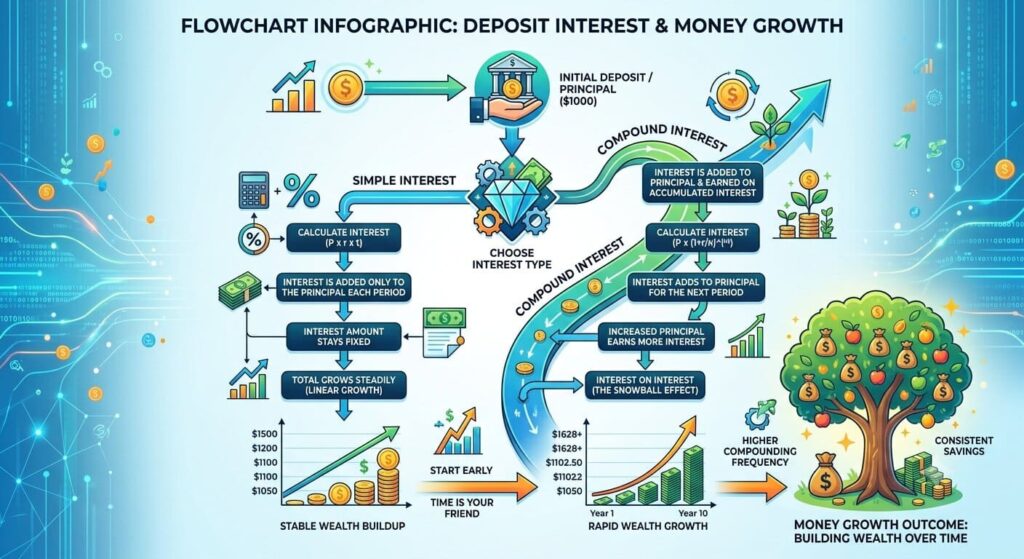
The operation of a High-Yield Savings Account is comparable to that of a standard savings account.
Here’s the basic process:
- Open an account with a bank or credit union.
- Deposit money into the account.
- The bank pays interest on your balance.
- Interest compounds over time.
- Your balance continues growing even if you don’t add more money.
Many financial institutions calculate interest daily and credit it monthly, allowing your savings to benefit from compound growth.
Today, most High-Yield Savings Accounts also include:
- Online banking
- Mobile apps
- Automatic transfers
- Electronic deposits
- Easy withdrawals
- Account alerts
- Bill payment options
These features make managing your savings simple from virtually anywhere.
The Consumer Financial Protection Bureau provides educational resources to help consumers compare financial products.
📈 What Does APY Mean?
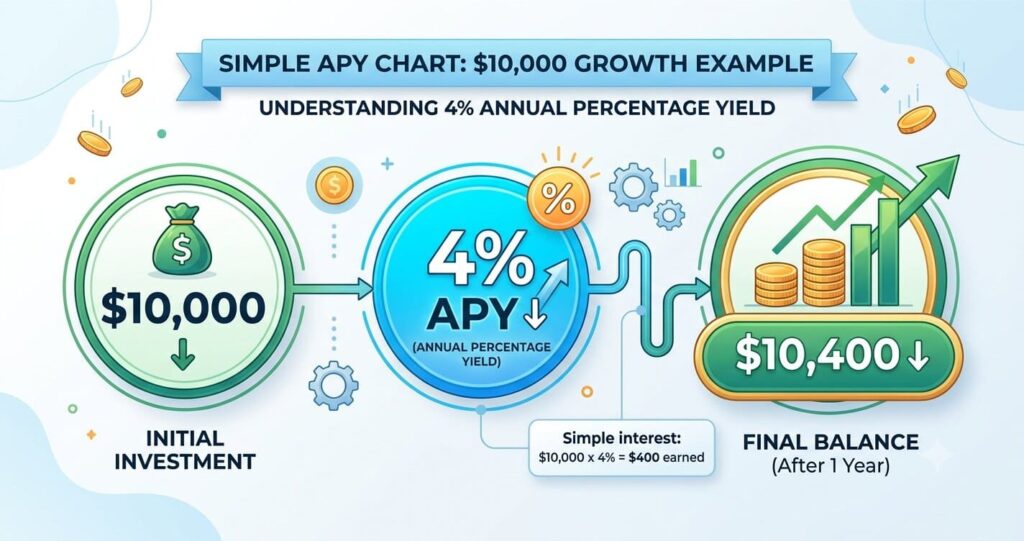
APY, or Annual Percentage Yield, is one of the first acronyms you’ll come across while comparing savings accounts.
APY represents the total interest you earn over one year, including the effects of compound interest.
Unlike a simple interest rate, APY shows how much your money can actually grow when earned interest is added back to your balance and begins earning interest itself.
💡 Example
Imagine you deposit $10,000 into a High-Yield Savings Account earning 4.00% APY.
If you don’t make additional deposits or withdrawals, your balance will grow throughout the year as interest compounds.
This illustrates why comparing APYs rather than just interest rates is more beneficial.
🔍 High-Yield Savings Account vs Traditional Savings Account
Many people assume all savings accounts are the same.
In reality, there are several important differences.
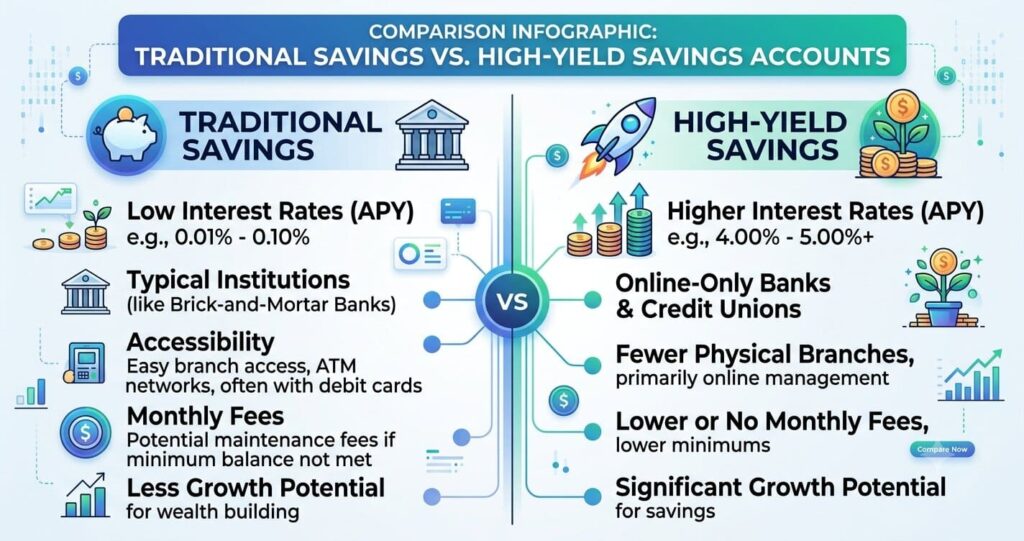
| Feature | High-Yield Savings Account | Traditional Savings Account |
| Interest Rate | Much Higher | Usually Very Low |
| APY | Competitive | Minimal |
| Online Banking | Excellent | Good |
| Monthly Fees | Often None | Sometimes Charged |
| Mobile App | Modern Features | Basic Features |
| Savings Growth | Faster | Slower |
If your goal is maximizing savings while maintaining easy access to your money, a High-Yield Savings Account generally provides more value.
🌟 Top Benefits of a High-Yield Savings Account
Choosing a High-Yield Savings Account offers several financial advantages.
💵 1. Higher Interest Earnings
The biggest benefit is earning more interest compared to traditional savings accounts.
Even a small increase in APY can significantly improve long-term savings.
🔒 2. Safe Place to Store Money
Eligible deposits at U.S. banks are generally protected by federal deposit insurance up to applicable limits, making these accounts a secure option for saving.
📱 3. Easy Online Access
Most High-Yield Savings Accounts include:
- Mobile banking
- Online transfers
- Automatic savings
- Instant balance monitoring
- Secure login protection
This allows customers to manage money anytime.
📊 4. Compound Interest Helps Your Money Grow
Interest earned is added back into your account.
Future interest is then calculated on the new balance, creating a compounding effect that steadily increases your savings over time.
💼 5. Ideal for Emergency Funds
Financial experts often recommend keeping emergency savings in a High-Yield Savings Account because it combines safety, liquidity, and competitive interest earnings.
💡 Why High-Yield Savings Accounts Are So Popular in 2026
More Americans are moving away from traditional savings accounts because they want their money to work harder without taking unnecessary risks.
Several trends have contributed to the growing popularity of HYSAs:
- Rising awareness of personal finance.
- Improved online banking technology.
- Competitive APY offerings.
- Easy account opening processes.
- Better mobile banking experiences.
- Low or no monthly maintenance fees at many institutions.
As interest rates fluctuate, consumers continue searching for accounts that offer the best combination of safety, convenience, and growth potential.
Many financial experts recommend keeping your Emergency Fund in a High-Yield Savings Account because it combines safety with competitive interest earnings.
🎯 Who Should Open a High-Yield Savings Account?
A High-Yield Savings Account is an excellent choice for many different types of savers.
It may be especially suitable if you are:
- Building your first emergency fund.
- Saving for a home down payment.
- Planning a vacation.
- Setting aside money for education expenses.
- Saving for a new car.
- Looking for a secure place to keep short-term savings.
- Wanting to earn more interest than a traditional savings account provides.
For people who prioritize security, accessibility, and steady growth, a High-Yield Savings Account can be a valuable part of a healthy financial plan.
⚠️ Things to Consider Before Opening a High-Yield Savings Account
A High-Yield Savings Account (HYSA) can be an excellent place to keep your savings, but it is important to understand how it works before opening one. While these accounts generally offer better returns than traditional savings accounts, they also have a few limitations that every saver should know.
Knowing these details in advance helps you choose an account that matches your financial needs instead of focusing only on the highest advertised interest rate.
📉 Interest Rates Can Change Over Time
One of the biggest differences between a High-Yield Savings Account and some other savings products is that the interest rate is usually not fixed.
Banks regularly review their rates based on market conditions, competition, and broader economic factors. As a result, today’s attractive APY may increase or decrease in the future.
For this reason, checking your account’s APY from time to time is a good habit. If another trusted bank consistently offers a better rate with similar features, you may decide to move your savings.
💳 Every Bank Has Different Rules
Although many HYSAs are similar, each financial institution sets its own policies.
Before opening an account, review details such as:
- Minimum opening deposit
- Minimum balance requirements
- Monthly maintenance fees
- Transfer policies
- Mobile banking features
- Customer support availability
Reading these terms carefully can prevent unexpected surprises later.
🌍 Online Banks May Not Have Physical Branches
Many of the highest-paying savings accounts are offered by online banks.
While this often means lower fees and better APYs, it also means you may not have a local branch to visit for in-person assistance.
If you are comfortable managing your finances through a website or mobile app, this usually isn’t a problem. However, some people still prefer having access to physical branches.
📊 Inflation Still Matters
Even when your savings are earning interest, inflation affects the real value of your money.
For example, if prices rise faster than your savings grow, your purchasing power may gradually decrease.
This is why many financial planners recommend using a High-Yield Savings Account for short-term goals and emergency savings, while considering long-term investments for goals that are many years away.
🏦 How to Pick the Right High-Yield Savings Account
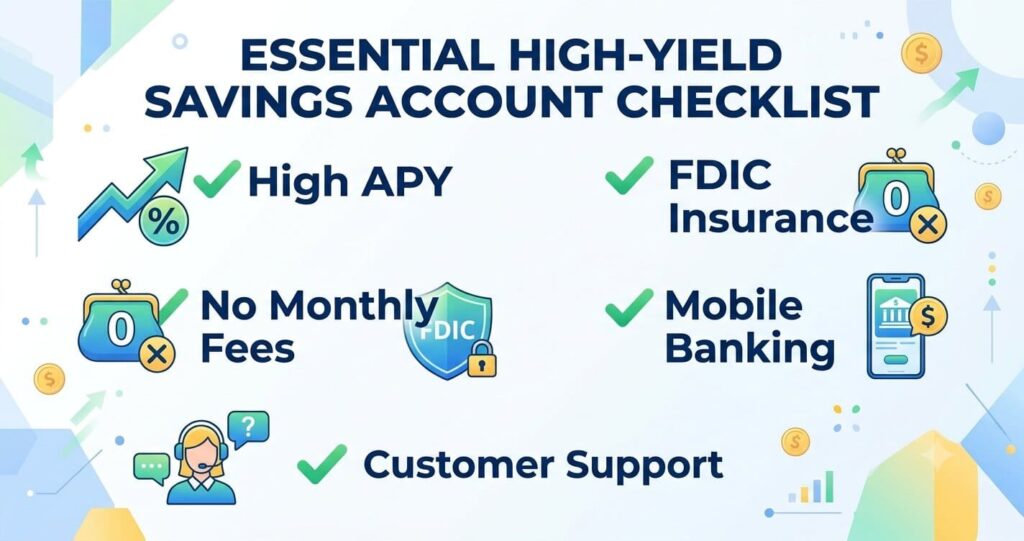
With hundreds of banks offering savings accounts, choosing the right one can feel overwhelming.
Instead of selecting the first account with a high APY, compare several important features.
⭐ Compare the APY Carefully
The Annual Percentage Yield (APY) determines how much interest your savings can earn over a year.
Although a higher APY is attractive, it shouldn’t be the only factor in your decision.
A slightly lower APY combined with better customer service, no fees, and a strong mobile app may provide a better overall experience.
💵 Watch Out for Hidden Fees
Some banks advertise competitive interest rates but charge monthly maintenance fees or require minimum balances.
These charges can reduce your earnings over time.
Whenever possible, choose an account that keeps fees to a minimum.
📱 Check the Mobile Banking Experience
Most people manage their finances using smartphones.
A good banking app should allow you to:
- View balances instantly
- Transfer money securely
- Deposit checks (if supported)
- Receive account notifications
- Monitor interest earned
An easy-to-use app makes saving more convenient.
🔒 Confirm Federal Deposit Protection
Before opening any savings account, verify that the institution provides the appropriate federal deposit insurance for eligible accounts.
This protection helps safeguard your deposits up to the applicable legal limits if the financial institution fails.
Knowing your money is protected adds confidence and peace of mind.
📋 Steps to Open a High-Yield Savings Account
Opening a HYSA has become much simpler in recent years. In many cases, you can complete the process online in less than 15 minutes.
Step 1: Research Different Banks
Compare APYs, fees, customer reviews, account features, and digital banking tools.
Don’t choose a bank based solely on promotional advertisements.
Step 2: Gather Your Information
Most banks will ask for basic personal details and identification information during the application process.
Having everything ready before you begin can make the process faster.
Step 3: Complete the Online Application
Fill out the application carefully and review all information before submitting it.
Mistakes can delay account approval.
Step 4: Fund Your Account
Move funds from your current savings or checking account.
Some banks allow you to start with a very small deposit, while others may require a higher opening balance.
Step 5: Set Up Automatic Savings
One of the easiest ways to grow your savings consistently is by scheduling automatic transfers every payday.
Even modest contributions can add up significantly over time thanks to compound interest.
💡 Smart Habits That Help Your Savings Grow Faster
Opening the account is only the first step. Developing good saving habits is what makes the biggest difference over the long term.
Consider these practical strategies:
- Save a fixed percentage of every paycheck.
- Increase your monthly savings whenever your income grows.
- Keep emergency savings separate from everyday spending money.
- Avoid withdrawing funds unless necessary.
- Review your savings goals every few months and adjust your contributions when possible.
Consistency matters more than making large deposits occasionally. Building a regular saving routine is often the key to long-term financial success.
If you’re planning to apply for a mortgage or personal loan in the future, learning how to Improve Your Credit Score can significantly improve your financial opportunities.
⚖️ High-Yield Savings Account vs. Certificate of Deposit (CD)
Both High-Yield Savings Accounts and Certificates of Deposit (CDs) are designed to help your money earn interest, but they serve different financial purposes. Choosing between them depends on how soon you may need access to your funds.
| Feature | High-Yield Savings Account | Certificate of Deposit (CD) |
| Access to Funds | Available whenever needed | Locked until the term ends |
| Interest Rate | Usually variable | Usually fixed for the selected term |
| Flexibility | Excellent | Limited |
| Early Withdrawal Fee | Normally none | Often charged if money is withdrawn early |
| Best Use | Emergency fund and short-term goals | Savings that can remain untouched for months or years |
If you’re building an emergency fund or saving for an expense in the near future, a HYSA is generally more practical. If you know you won’t need the money for a fixed period, a CD may provide predictable returns.
🚫 Common Mistakes People Make
Opening the right account is only part of the process. Many people reduce their potential earnings by making avoidable mistakes.
💸 Chasing Promotional Rates Only
Some banks advertise temporary promotional APYs. Before opening an account, check how long the rate lasts and what the standard rate becomes afterward.
📉 Ignoring Account Fees
A high APY loses its appeal if monthly maintenance fees regularly reduce your earnings. Always read the fee schedule before applying.
🔄 Never Reviewing Your Account
Savings rates change over time. Comparing your account with other reputable banks once or twice a year can help ensure you’re still receiving a competitive return.
🛍️ Using Savings for Everyday Spending
A High-Yield Savings Account works best when it is reserved for emergencies or planned financial goals. Frequent withdrawals can slow your progress and make it harder to build long-term savings.
📅 Saving Irregularly
Consistency is more valuable than making occasional large deposits. Setting up automatic monthly contributions can help you stay on track and grow your balance steadily.
💡 Practical Tips to Get the Most from Your HYSA
A few simple habits can significantly improve your savings journey.
- Transfer money into your account as soon as you receive your paycheck.
- Increase your automatic savings whenever your income grows.
- Keep emergency savings separate from travel or shopping funds.
- Review your savings goal every few months.
- Compare APYs periodically without switching banks too frequently.
- Avoid withdrawing money unless it is genuinely necessary.
Small, consistent actions often produce better long-term results than trying to save large amounts only once in a while.
Visit the IRS website to learn how savings account interest is treated for tax purposes in the United States.
❓ Frequently Asked Questions
💬 Can I open more than one High-Yield Savings Account?
Yes. Many people maintain separate accounts for different goals, such as an emergency fund, vacation savings, or a future home purchase. Managing separate goals can make budgeting easier.
💬 Is there any risk of losing my deposited money?
A High-Yield Savings Account is generally considered a low-risk savings option. If you open an account with an eligible federally insured institution in the United States, your deposits are typically protected up to applicable insurance limits.
💬 Who benefits the most from a HYSA?
These accounts are ideal for individuals who want to earn more interest while keeping their money accessible. They are especially useful for emergency funds and other short-term financial goals.
💬 How often do banks update interest rates?
There is no fixed schedule. Financial institutions may adjust APYs whenever market conditions change, so it is worth checking your rate from time to time.
💬 Can I move money between my checking account and HYSA?
Yes. Most banks allow secure electronic transfers between linked accounts, making it simple to deposit or withdraw funds whenever required.
🎯 Final Verdict

A High-Yield Savings Account is one of the easiest ways to make idle cash work more effectively without exposing it to the volatility of the stock market. Whether you are creating an emergency fund, saving for a major purchase, or simply building stronger financial habits, a HYSA offers a balance of safety, convenience, and growth.
Before choosing an account, compare more than just the advertised APY. Consider fees, customer support, mobile banking tools, account requirements, and federal deposit protection. A thoughtful comparison today can help you earn more and avoid unnecessary costs in the future.
The most important factor, however, is consistency. Regular deposits, even if they are modest, combined with compound interest can help you reach your financial goals faster over time.
Explore more Personal Finance Guides on FintechInsureHub to improve your financial knowledge and make smarter money decisions.